They need to be remembered on the day they happened.
Birthdays.
Weddings.
Graduations.
For me, I love to remember the happy things in life.
For the not so happy things, whilst I think it is important to remember them, I don’t want specific dates to be associated with them. For example, I don’t want Christmas to be spoiled because something sad happened in my world just before or after it.
Or so I thought.
Turns out I seem to find the dates of the sad things important too.
I had to stay late at work today. It was busy, things had to be done. I had planned to visit the cemetery. I’ve been there on an off for the past year and half or so. I don’t really enjoy it – I don’t think one is supposed to have a good time there, but I am always glad I’ve been.
Today, having planned to go, and then finding that it might not be possible, I discovered that I really did care about going on a significant date.
As it is June, it was actually still light enough after I left work, so I decided to pay a quick visit. (gates were open, but once I had parked it seems that the cemetery is actually closed to ‘visitors’. It had been such an emotional rollercoaster of a day that I decided to ignore the signs and stood for a few moments at the foot of the final earthly resting place of both my mum and dad.
As I stood, I reflected on the world that we live in. The unprecedented impact of Covid-19, the protests in the USA, London and beyond. I wondered what mum and dad would have made of it all. On one hand I am glad that they are free from all the change and risk that Covid-19 has brought, on the other, I wish I was able to talk to them about it, to learn from their experience.
I wondered how they would have coped with things like church by Zoom, and not being able to give their grandchildren a hug.
The strange thing about faith, at least the faith that I have, and that I know my parents shared, is that whilst I would give almost anything to have them here with me right now, I know with absolute assurance that they are in a much, much better place. I know that I will see them again. I know that if I could but glimpse the experience they were currently having, I would want to be there more than I want them back here.
The Apostle Paul summed that up well when he wrote “For me, to live is Christ, to die is gain.” He understood that co-labouring with Christ here on earth was often a painful, but always worth it experience. He also knew that finding himself with Christ on the other side of death was infinitely better.
I believe that too. It doesn’t always stop the tears though.
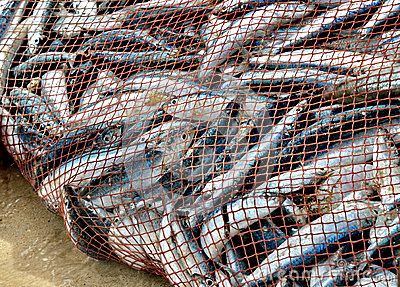
In Matthew 13, Jesus tells us that ‘the Kingdom of Heaven is like a net that was let down into the lake and caught up all kinds of fish. When it was full the fishermen pulled it up on the shore. Then they sat down and collected the good fish in baskets, but threw the bad away. This is how it will be at the end of the age. The angels will come and separate the wicked from the righteous and throw them into the fiery furnace where there will be weeping and gnashing of teeth.’
I began a series recently looking at ‘the Kingdom of Heaven’ statements in the gospels, and wanted to explore this one a little.
Even if we haven’t been fishing ourselves, most of us are familiar with the picture of someone standing at the edge of a body of water with a rod, fishing line and some bait. This type of fishing is for sport or ‘fun’. Most of us will also be aware that the majority of the fish that we eat is caught in large nets, dragged behind a boat, capturing all in the way. This is the sort of picture that is being painted by Jesus.
When He began talking about good and bad fish, I started to wonder how they would have decided which was good and which was bad. Was it a size thing? Did the smaller ones get thrown back to fight another day? Was it only those whose appearance (have you ever seen a good looking fish??) was appealing and would bring a good price at market? Surely all fish are good? Genesis 1:20-21 tells of God creating the things that live in the sea, and states that ‘it was good.’
When God gave the Law to Moses, He said that the only ‘clean’ type of fish were the ones that had scales and fins. (Leviticus 11:9-12, Deuteronomy 14:9-10). Clearly sin had entered the world between the two statements, a fracture in the goodness that God had established, but I am unclear as to why things like sharks and sturgeon were singled out as being unclean.
I assume that this is the basis in which the fishermen of Jesus time chose the fish that were good and threw away those which were bad.
What then are the ‘signs’ that will allow the angels to separate us? Jesus says that the wicked will be separated from the righteous. What does a righteous person look like? What will the evidence be.
At the end of Mark’s gospel, Jesus tells us about the signs of those who believe. He says they will drive out demons, they will speak in new tongues, they will hold snakes and not get hurt, they will drink poison and not die, they will place hands on the sick and they will get well. (Mark 16:17)
I get very cautious about people that say they believe, confess that they are Christians yet I can see no evidence of the transformation that they claim has happened in their day to day lives. Jesus says there will be.
The challenge for me, for us, is what is the evidence in my life. I don’t think it was necessarily Jesus intention that we use the list he gave as a check box exercise. It isn’t as if once we have spoken in tongues and prayed for a few people we are two steps up the ladder to heaven. I believe it is there to remind us that with the Kingdom of heaven within us, the things that should be impossible are actually possible. Have our lives been sufficiently changed by the King, that the rule and reign of the King leaks out of our lives, changing the atmosphere and culture of our environment?
A place where the King is on the throne is a far more peaceful, powerful, effective place to live.
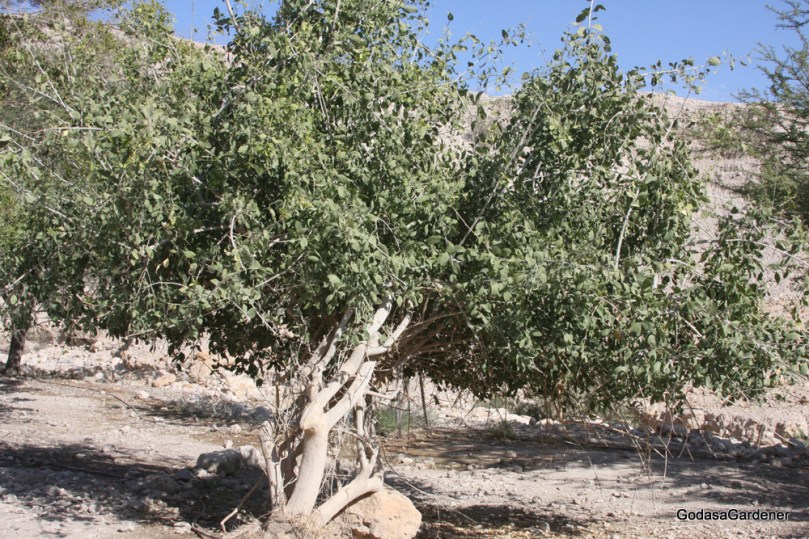
This is a parable that I’m sure you are all familiar with. Jesus tells us that the kingdom of heaven is like a mustard seed, which a man plants, and although it was a really small seed, grew into a tree that birds could rest in.
I was thinking about this and did a bit of research which I think gives us a bit more insight into what Jesus might have been saying to us.
It seems that there are at least four different contenders for which type of mustard seed that Jesus might have been referring to. Sinapsis nigra, the black mustard seed appears to be the most likely candidate. It grows in the right area, with the right climate and produces the right size of seeds. (others that may also fit the bill are Sinapsis arvense or Sinapsis alba)
The black mustard seed is known for its rapid germination. It seems that it begins to grow the day after it is planted, and grows rapidly in one season. Although not actually the smallest seed in Palestine at the time of Jesus, it would have certainly been the smallest that was planted and cultivated. (between 1 and 3mm in diameter)
In order to grow, a seed needs to die, germinate, take root and breakthrough the soil.
When Jesus said the Kingdom of heaven was like a mustard seed, what was He saying? If we understand the Kingdom of heaven to be a place where the rule and reign of the King is realised, and we apply that rule and reign to our lives we notice the following.
Without Christ, we begin as something small and insignificant. We have no real structure, and can easily be blown away on the wind.
When we surrender at the foot of the cross, the outer shell is broken away, and there is a new germination of our inner being. This takes root quickly and we begin to grow. The ideal of heaven is that our growth is rapid. There is no waiting around for the right conditions. Everything we need is supplied, and we flourish, demonstrating the power and majesty of the Creator.
As we grow, we reproduce, more seeds that will yield still more potential. There are two purposes to our growth. We are positioned ideally to allow other to rest, to take refuge and shelter from all the world throws at them, and we reproduce, more seeds. The seeds can be used for flavour – we are to flavour those around us with testimony of the King. New trees can be grown, to increase capacity for allowing still others to rest and take shelter.
One of the errors the church in the West makes far too often is that when we see a small mustard seed planted, we try to control its growth. We water it and feed it with small nurture groups and special ‘new Christian’ classes. We prune it ever so carefully, to make sure the growth is shaped into what we believe a new follower should look like, taking off the leaves and branches that don’t quite fit or look right, and we find ourselves with powerless Christians that come to church out of obligation or habit, and never actually fulfil their potential to grow new trees and shelter those who need it.
Jesus said that if we were His friends, we would do what He did (and greater things than that too). Let’s not put too many restrictions on the new growth, the growth that is supposed to be rapid, that is supposed to surprise given the small beginnings. Teach them, yes. Encourage them, yes.
Tell them they can’t, simply because we haven’t. Absolutely not.
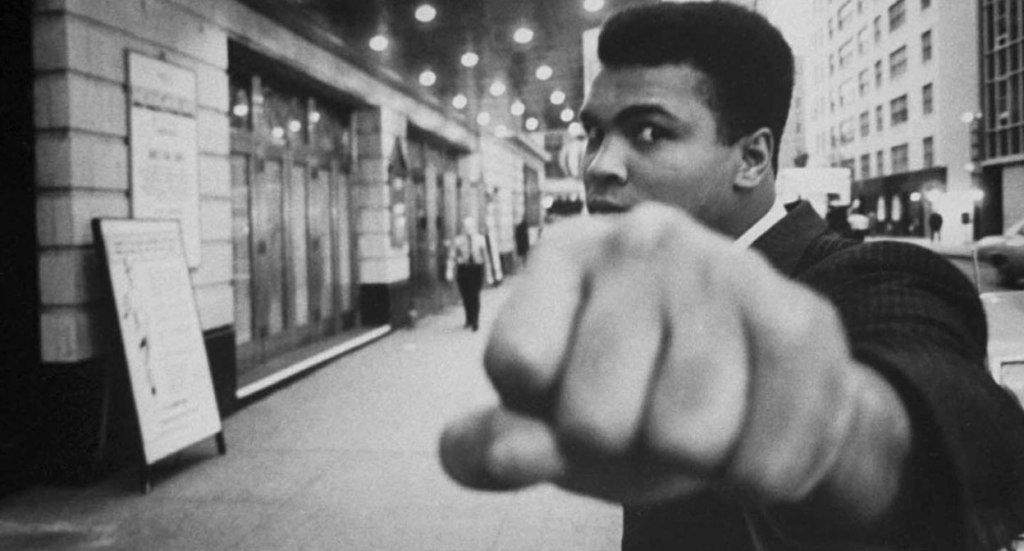
I saw a quote today attributed to Mohammad Ali. He said “I am the greatest. I said that before I knew I was.”
He wasn’t the greatest at the time he said it, but was aware of his destiny and what he was created to achieve. I imagine that when he first said it, there were very few that believed him. Undetered, he kept telling himself that he was the greatest, and once he believed, he went about convincing others that it was true too.
Many people in the church (certainly in the UK) are very cautious about saying things that are not true. Often this is borne out of wisdom, but my concern is that in doing so we prevent some to fulfil their destiny by speaking out truth as God sees things. At its heart, prophecy is seeing a little further ahead, and a little deeper than can be seen in the natural realm. It is speaking the truth that will be, rather than what appears to be.
James tells us that the power of life and death is in the tongue, so speaking positive things about people, including ourselves, will help us to experience life to the full. It could also be said that the opposite is true. If you constantly tell yourself that you are no good (generally, or at something specific), or that you can’t, or that no one loves you, it will not be long until you believe that. The more you believe it yourself, and tell others, many of them will believe it too. It won’t be a conscious thing, but they will.
I know that being British puts a bit of a hold on being able to be too positive about ourselves, so, if that is the case for you may I encourage you to listen to what God says about you.
You are known. God knew you before you were formed (Jeremiah 1:5). He has had a plan for you since before you were even thought of.
You are His workmanship, created to do good things. (Ephesians 2:10) We are created in His image.
You are a child of God (John 1:12, Romans 8:17) We have been adored into His family, and we are joint heirs with Christ.
You are friend of Jesus (John 15:15) He doesn’t call you servants or slaves, He calls you friend, and shares things with you.
You are not subject to any condemnation (Romans 8:1) (and if He doesn’t condemn you, it is a pretty good bet that you shouldn’t condemn you either)
Called to be a saint (1 Cor 1:2). I think we spend to long believing (even if we don’t actually say it) that we are a sinner. That isn’t how God sees us. My experience is that if we believe that we are sinners, we will end up doing just that. If we tell ourselves that God sees us a saints, we will begin to live like saints.
You are being transformed into His image.(2 Cor 3:18). The closer we walk with Him, converse with Him and listen to what He says about you and what you are capable of, the more like Him you will become.
The bible says that you are glorious (2 Cor 3:18). He is transforming us from one degree of glory to another. Even if you don’t feel as glorious as someone else, the truth is that you start glorious and become more glorious.
This is by no means an exhaustive list. The bible is full of messages about His feelings about you. I guess the most obvious one is that He loved each of us so much that He sent His Son, who willingly offered His life to make it possible for relationship with the Father to be restored.
Perhaps that is the greatest statement of all. He considered you to be worth it. How much more evidence do you need?
The nation (and most of the world), is in lockdown. For months restrictions have been placed on us. There isn’t a person in the country that hasn’t been affected. Families have been unable to visit each other, shopping has changed for ever, in time we will have to come to terms with a new normal.
Despite the restrictions I consider myself very fortunate. I have been able to do something that before lockdown I was thrilled to be able to take some time away from. Since lockdown, I have been happy to be able to leave the house and go to work. That’s not to say it’s been easy. Work too has changed. Routine has disappeared. Tasks that used to fill the day are now completed in a fraction of the time. Tests that didn’t exist a few months ago now take up more than a full day’s work. There is little expectation that numbers of Coronavirus tests to be performed will decrease anytime soon. Perhaps the type of test to be carried out will change from testing to see if someone has the virus to testing to see if they have already had it (the promised antibody test). My suspicion is that somehow, we will be expected to find a way to do both.
I know of others who have not been outside their own home since lockdown started. They have had to communicate with the outside world and their family through windows and online.
Many of you will either have had similar experiences, or variations on these two extremes.
The question I want to ask you is while you are restricted in movement, with time to do things that are out of the ordinary for you, what are you thinking about?
Some will be dreaming of life after lockdown, to getting back to the things that they used to do. Others will be thinking about holidays they want to go on, or simply to be able to walk around without fear.
For a lot of people, fear really is gripping them. They are struggling to cope without interaction with others. Sitting at home with no outlet can be crippling.
When Paul and Timothy wrote to the church at Philippi, they gave some suggestions for things to think about.
They wrote “Finally, brothers, whatever is true, whatever is honourable, whatever is just, whatever is pure, whatever is lovely, whatever is commendable, if there is an excellence, if anything is worthy of praise, think about these things.”
Don’t let fear take hold. Life will never be the same as it was before coronavirus. We need to get used to a new normal. The more we think about true, honourable, just, pure, lovely and commendable things, the more we will be able to shape whatever the new normal is into something that is better than that which we have had to leave behind.
“So you wanna be a cowboy, don’t you know it’s more than just a ride?”
Just one line from an album by Bon Jovi, but one that has stuck with me since I first heard it – more years ago than I care to remember.
The thing is I have applied the question to pretty much everything I have ever done, particularly when it comes to my faith.
Don’t get me wrong, there have been times that I have forgotten the answer, but the question seems to keep cropping up.
Let me put it another way “So you wanna be a Christian, don’t you know it’s more than just a prayer?”
For me becoming a Christian doesn’t happen simply when you pray a prayer. It is a change of lifestyle, a commitment to try, with God’s help to get things right. It is an about turn, a purposeful march in the opposite direction. Ultimately it is a change in management, from one who was determined to bring destruction, to one whose wants to bring life in a way that I never thought was possible.
The term Christian really means someone who has put Christ first and foremost in their lives, someone who has chosen to model their life on His example. “little Christ” may be a better way of saying it. In the same way that in many ways my son is a ‘mini me’, I am to be a mini Christ. In time, I hope my son will grow to be more like me, leaving the bad bits to one side, but I try to be an example that is worth following.
Christ is the ultimate example of what I hope to be. The more I learn about Him, His ways and His mission, the more I want to emulate it.
Which is why when I meet or hear of people that profess to be Christians, the first thing I look for is whether I can see evidence of the one who lent His name to the label in the way they live their lives.
Too often today, the example that the world sees of Christ is people that have prayed a prayer to get them a ticket to heaven, but with no sense of change in their day to day lives. If Christ truly is living in me, then surely, I should be doing what He did. 1 John 2:6 says that “if we abide in Him, we ought to walk in the same way which He walked.” That means having compassion for those that don’t deserve it, loving the unlovable and feeding the hungry. That means healing the sick and telling others of the reason for the hope that we have.
John 14 quotes Jesus “I tell you the truth, anyone who has faith in me will do what I have been doing. He will do greater things than these, because I am going to the Father. And I will do whatever you ask in my name, so that the Son may bring glory to the Father.” (emphasis mine)
Christianity looks like something. There will be fruit if you are connected to the Vine. It’s not about praying a prayer and then going to church occasionally (or even regularly). It’s about changing everything, because He is the pearl of great price. Totally worth it.
So – you wanna be a Christian – it’s more than just a ride – but what a ride.
“On the evening of that day, the first day of the week, the doors being locked where the disciples were for fear of the Jews, Jesus came and stood among them and said to them “Peace be with you.” When he had said this, he showed them his hands and his side. Then the disciples were glad when they saw the Lord. Jesus said to them again, “Peace be with you. As the Father has sent me, even so I am sending you.” And when he had said this, he breathed on them and said to them, “Receive the Holy Spirit.”” (John 20:19-22)
I wonder what you think of when you read these verses? Perhaps you find yourself reading the part about Jesus showing his hands and side, and think about Thomas, and that he doubted, and sometimes you do too? Do you skim read the first part, and get to the exciting bit at the end when Jesus gives the disciples the Holy Spirit?
As I read them this week I was struck by the first sentence.
The evening of the first day after Christ was crucified, behind locked doors the disciples were meeting. It was the locked doors that made me think.
They were scared. I can understand why. Their best friend, their Rabbi, the one who they were beginning to really believe was God had been taken, brutally beaten, crucified and laid in a garden tomb. Everything that they had come to believe was upside down. The people who had done this to Jesus were looking for those who followed him. Harsh punishment was the least that they could have expected. Death for them was a very real possibility.
How does that relate to us today. The truth is, certainly in the UK at the present time, believing in and following Jesus is unlikely to result the death penalty from the ruling authorities. I understand that this may well be true in some parts of the world, but it isn’t where I live.
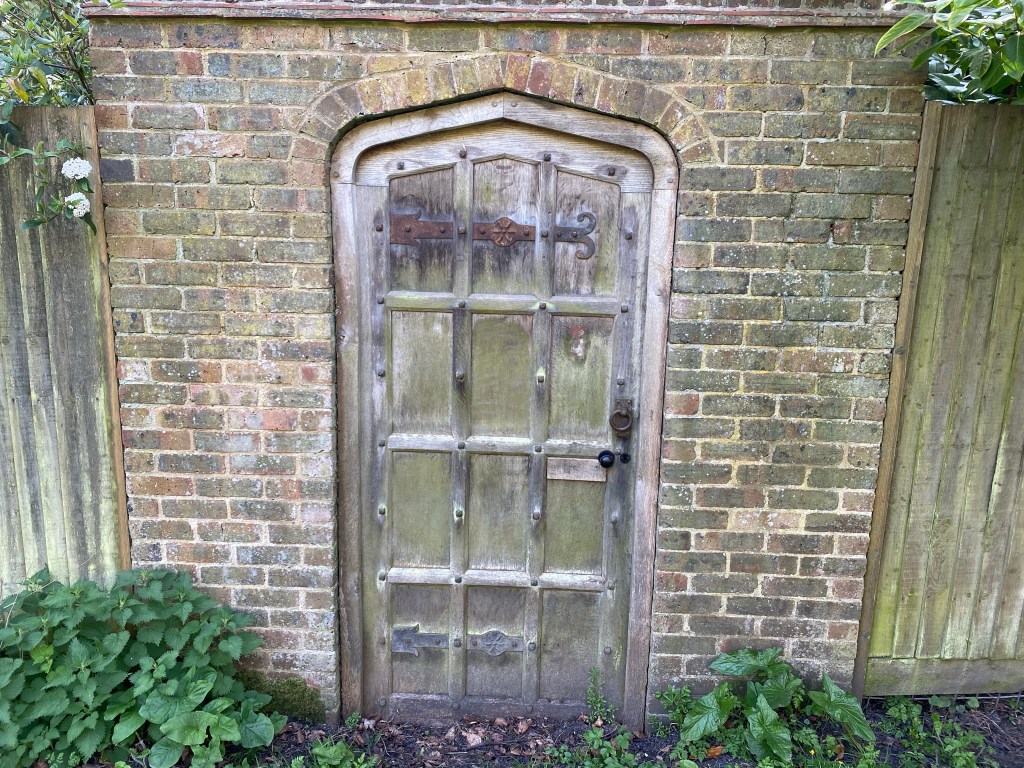
But I wonder though if we are guilty of still locking our doors and hiding away for fear of what might happen to us? I don’t believe that we really are afraid of the authorities or of what others think. None of us like ridicule, so perhaps that might be seen to be a reason to be careful, but I think the reason lies much deeper than anything man can do to us.
A friend of mine recently shared about a wall in her garden that had fallen down following recent storms. The brick wall had stood firm for over 15 years, performing the purpose of a wall and appearing to be strong. After the winds from the storm hit and the bricks lay in rubble, it was discovered that the cement holding them together was largely sand rather than cement. She shared that perhaps this was a time to sift out the sand that wasn’t doing us any good out and allow Holy Spirit to bind that which was there together in a stronger, more lasting way.
I wonder if sometimes we are so afraid that sand might infiltrate our lives that we hide away and don’t allow anything in at all. We have our salvation, our version of doctrine and that will do us nicely thank you very much. We have been told that the world is ‘bad’ (and to a large extent a lot of what the world stands for is not helpful for the believer), so we lock ourselves in our holy huddles and pray as if by isolating ourselves from the world we will fulfill the Great Commission to go into the world and make disciples.
Sometimes I think that we are so convinced that we are going to be tainted that we are even afraid to listen to new thoughts and ideas from other Christians. We are so afraid that if we listen to someone outside our circle that we will be betraying that which we believe in and have ‘signed up for’ that we miss the new thing that God is doing in this season. It was once said that the biggest obstacle to the next move of God, is the current move of God.
It is vital that we weigh each and every new thought against scripture. There is a wealth of errant teaching available, so we have to be “wise as serpents” (Matthew 10:16). Jesus himself did not come to abolish the law; he came to fulfill it. He didn’t come to change the heart of what God had revealed to Moses, but to show how there was a deeper meaning to what had been passed down. There are several “you have heard it said……but I……” sayings in the gospels. Let’s not shut our hearts to Jesus challenging our interpretation of things.
I pray you have been and will continue to be blessed this Easter, and in spite of the restrictions on movement and fellowship in place at this time, you will find a way to unlock the doors of your heart, and receive every new thing that Holy Spirit is pouring out at this time.
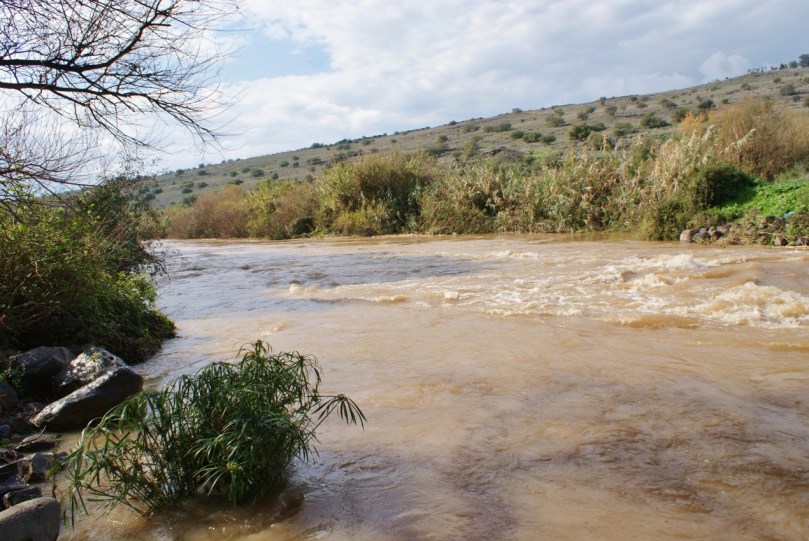
I began reading the book of Joshua recently. Early on in the book, the people of Israel approached the river Jordan. In order to take the land that God had promised them, they had to cross. At around 100 feet in width during normal conditions, the Israelites approached whilst the river had burst its banks and was in flood (as it was around harvest time) We are told that the priests were 1000 yards in front of the people, and that they were in the middle of the rivers. That’s a minimum of 2000 yards to cross. Imagine trying to cross that distance with one or two people, let alone a nation.
We are all familiar with the account. The priest carried the Ark of the Covenant into the middle of the river, and the waters dried up.
The people walked across on dry land.
I wanted to share some thoughts that occurred to me as I was reading.
The priests had to take a step of faith – the Jordan was in flood at that time of year.
God had spoken (through Joshua) – but they still had to step out. It wasn’t until they stepped into the river that the waters parted. Sometimes even when we hear clearly, and have a course plotted out for us by God, we don’t get the final confirmation until we take that step of faith, until we get our feet wet.
It was the priest that had to take that first step. The people were gathered, all ready to go. There was no sense of trying to rush things though, of trying to get across before the priests had led the way.
The third thought that I had was that the priests were 1000 yards in front of the people they were leading.
It’s often lonely at the front. Often, leaders are standing alone, having taken a step of faith, having showed the people the way. At 1000 yards away it can be difficult to see what is going on clearly. The priests would have had a much better vision of what lay on the other side of the river than the people. Are you ready to trust your leaders? They are further along the path than you are and have been shown what lies beyond where you currently are.
I also find it interesting that in standing firm in the middle of the river, they allowed the people to pass them by. To go and take the land on the other side whilst they stood firmly where God had told them to be. Protecting the people, ensuring that before they moved on everyone was across who was going across. Are the leaders who are reading this willing to hold the ladder that you have put in place and allow others to climb it before you? Perhaps that means that they will see the things you have longed to see sooner than you. Are you prepared for that to happen?
It takes tremendous courage to take the first step of faith into the unknown. How much more courage does it take to stand whilst those you lead are forging on ahead? I love how the priests were resolute in their task. Not only were they making sure that everyone got across, they were also ensuring that those that had crossed didn’t try to go back. The way forward was the only way that they could inherit the land that God had promised. There was nothing for them if they went back to the wilderness, back to Egypt.
The priests did the job they were asked to do. If they had tried to rush it or had moved forward rather than standing in the middle, the people would have perished, just like the Egyptians when the Red Sea parted to allow the Israelites to cross. In standing in that middle ground, they were protecting the people. Your leaders are doing the same for you.
Let me encourage you to pray for your leaders. I would suggest that leaders outside the church need prayer too, as leadership can be a very lonely role, even if it is done as part of a team.
There were further instructions for the people after they had crossed. They had to go back and collect stones in order to build a memorial to what God had done for them that day. All that time the priests stood there. Waiting for the purposes of God to be fulfilled. You might wonder why your leaders seem to lead you somewhere then pause for a while. Some of you will be excited to move on to the next thing, but good leaders will often wait for a season to allow everything that God has promised or commanded to come to pass. It is good to maintain a momentum, but it is also good to wait. Isaiah wrote “those who wait on the LORD will renew their strength, they will rise up on wings like the eagle. They will walk and not grow weary they will run and not feint.”
Once the priests had moved on out of the water the way behind them was shut off. The waters started to flow again. The way back was blocked.
Once the task/mission/ direction from God has been accomplished it is important to head to the next one (in this case Jericho.) This was to be the first of many battles after the miracle of the waters parting.
The people had waited knowing the importance of prayer, worship and leadership in getting where they were supposed to be. Until the priests came to set the atmosphere for the next battle, there was no point in going forward.
We cannot take strongholds alone. Prayer & worship are essential. We need leaders that are prepared to model what to do. That might mean looking a bit silly in front of perceived wisdom. No battle tactician would have suggested walking around a city singing and playing your trumpet would be successful. When your leaders seem to be modelling something a bit new, or different to how they have done things before, are you willing to follow in their footsteps, believing that they have heard from God?
The concept of submitting to anyone, especially leaders isn’t a popular thing these days especially outside the church. I think that the reason for that is that we have been subject to some bad examples who had demanded submission. The Greek word hupetasso means to arrange oneself under. There is a sense that arranging under a leader is not burdensome or difficult, but actually something that brings joy, comfort and security.
May I encourage you to submit to your leaders, as a choice, not because they expect it. Choose to follow, even if that means getting your own feet wet, even if it means standing up to be counted, even if it means doing something that the world may laugh at you for.
As we remember the ‘triumphant entry’ of Jesus into Jerusalem on what we now call Palm Sunday, I began to wonder afresh what the Jews of that time were expecting Messiah to look like. They were celebrating his arrival, waving palm branches and shouting ‘Hosanna’, and yet somehow seemed to have missed who He was and what His mission was entirely.
Jews today still wait for Messiah to arrive.
What or who are they looking for? Did they simply not notice, or were they blinded to the truth so they didn’t try to stop events?
I headed to a website that described what Jews believe about Messiah and what sort of attributes He would have. I found it fascinating that the majority of the things are clearly already fulfilled in the life of Jesus.
They say that Messiah will be a ‘child who grows up to rule in peace.’
Jesus was the Prince of Peace. He gives us peace that surpasses understanding. I know that I can testify to encountering that peace, while in the midst of personal storm I have felt a peace that doesn’t make any sense.
They say that he will be a skilled judge and will be a descendent of King David.
Matthew 1 lists the genealogy of Jesus, clearly showing His lineage back to David and beyond. There is no doubt of His pedigree in that respect. His judgements were like nothing that had ever been heard before. There were two types of Rabbi – those that followed after the teaching of a previous Rabbi, and those that had authority to interpret scripture. Jesus clearly had the authority to interpret scripture. When the woman caught in adultery was brought before Him, those watching on knew what the traditional interpretation of the law was and were eager for an opportunity to trip Him up. Jesus also knew the law but knew that there was far more to it than had been originally interpreted.
They say that Messiah will be a great warrior. Now, that one is perhaps a little harder to see fulfilled, certainly on Palm Sunday. It wasn’t until a week later that Jesus would fight His greatest battle – and win. The war He was fighting was against the effects of the enemy in people’s lives. He cast out demons, He raised the dead to life, He healed the sick. The Jews were looking for someone who was going to come and over-throw the Romans and give them back their nation. When Jesus rode into Jerusalem, He turned towards the Temple, rather than towards the palace. It became clear to those who knew their scriptures, that this was to be no rebellion and uprising.
The website went on to suggest that the arrival of Messiah depended on the people Israel. If Israel merited a Messiah, He would appear on the clouds. If not, He would arrive on a donkey. Perhaps they were so convinced that they were doing the right thing, that they were obeying everything that Moses had commanded them, that they were already righteous enough to merit a Messiah coming on the clouds. They missed the fact that Jesus wept for them, and for Jerusalem. He could see that theirs was an empty religion, in desperate need of a Saviour. He rode in on a donkey to fulfil the prophecy of Zechariah yes, but also to declare to the Jews that it was time to realise their need of relationship with the God who had chosen them centuries previously.
They believed that the Messiah would come as a blighted beggar. Jesus himself said that foxes have holes and birds have nests, but the Son of Man has nowhere to lay His head. He didn’t sit at the gates of the city and ask for alms as the beggar who was later healed by Peter and John, but he didn’t come from a well to do family with riches. He didn’t have a foot on the 1st century property ladder. He slept where He could, in the homes of those who believed who He was.
The Messiah was to be a successful philosopher. From the age of 12, we know that Jesus was able to confound the teachers of the Law with His knowledge of scripture. He spent so long in the temple in Jerusalem at that time that His earthly parents lost Him. He answered questions with questions and tied them up in knots.
I think for me the one that is closest to my heart is that they believed that the Messiah was to be “waiting for us, among those who need healing.” The gospels are full of stories telling us that Jesus healed each and every one who came to Him for healing. Others He went out of His way to find and heal (think of the man at the pool of Bethesda). Others were healed with a word, some He touched. Each time, He was filled with compassion for them and brought the Kingdom of Heaven near to where they were.
So close that they could reach out and touch it.
I am so grateful that there were some there on that first Palm Sunday who did see Jesus for who He was. The read the signs and believed. Without them, I would never have found out about the man who was God, who gave up everything for me. The one who suffered the most brutal death imaginable in my place, is the one whose resurrection we will celebrate in a weeks’ time.
I pray that unlike the majority of those who were there, you will see the signs, that you will open your heart, and that you will allow the One who suffered for you, a place in your life today.
We are about to celebrate perhaps the most important of events in history. As we head into one of the most familiar stories of the Christian faith, I wanted to look at some of the events that perhaps we have simply skimmed over in the past, or perhaps even pre-judged following years of assuming things about the story.
We live in days of 24/7 news. There are frequently reports of things that are due to be said, before they ever cross the lips of those who are going to say them, and endless analysis it is difficult to look at this story with anything other than the lens of familiarity. When the news actually happens, we almost don’t hear it because it has already been reported as being about to happen. Nothing is new anymore.
It is very easy to view the Easter story with the same lens. We know how the Easter story ends, and therefore, even with the best of intentions our minds can skip quickly to the resurrection and the barbecue by the seaside. Part of that may well be that whilst we want to appreciate all that Christ went through for us on His way to the cross, we would rather not be bothered with the gruesome (and gruesome they are) details.
I wonder, if we have ever considered the crowd that gathered on Palm Sunday as anything but fickle and two faced? One week they were shouting “Hosanna”, “blessed is he who comes in the name of the Lord.” There was a huge celebration. They recognised who Jesus was and what He had come to do.
It is true that they were there for “the Feast”, but how had they found out about Jesus? Did they just suddenly appear, or had they been following Him around for a while? We are familiar and comfortable with the disciples travelling around with Jesus. A nice relatively small group of men, following their Rabbi wherever He went, learning from Him, and trying to do what their Rabbi did. If we look a little further back in the gospel of John however, we find Jesus at the home of His friend Lazarus, and his sisters Mary and Martha. Lazarus had died four days previously, and the Jewish period of mourning had well and truly begun. Extended family, friends and probably professional mourners had gathered to help the sisters in their time of grief.
As Jesus stopped at the tomb of Lazarus, a large group had gathered, primarily to support Mary and Martha. They were only too aware of what was behind the stone of the tomb. When the man who they knew had died walked out, they were now very aware of who Jesus was, and the power that He had. A miracle, and they became followers of Jesus too. That isn’t something we should be surprised about really. Jesus himself taught that a demonstration of heaven was to be expected. Show them, then explain to them what its all about was his modus operandi. This crowd (for that is what John records it was) followed Jesus to Jerusalem, and freely and excitedly called to all who were in earshot “Hosanna – He saves”
A week later, we are expected to believe that they were crying for His blood? That is what I read and accepted for decades, without question. The more I think about it though, the more I wonder if it was the same crowd.
Jesus was in Jerusalem for the Passover Feast. This feast was to commemorate the meal that was eaten just before the Israelites left Egypt. It reminded them that the Angel of the Lord had passed over their dwellings. When one looks in details at this feast and all it involves, one can start to appreciate what actually happened on that first ‘Good Friday’.
The meal follows lots of readings from the Torah, and many prayers. For most of these proceedings, those taking part have had nothing to eat, save some bitter herbs dipped in horseradish. Towards the end, as the candlelight begins to dim, a meat or fish course is served, with bread, and at least (because there are still prayers and scriptures) four cups of wine. I know how I feel after a large meal, and especially if I have consumed even one glass of wine, let alone four. All I want is to slip of to the sofa and close my eyes. Even more so if the meal doesn’t finish until well into the small hours of the next day.
And this is where we meet another group of people who get a bad press at Easter. Peter, James and John were asked by Jesus to stay awake and keep guard, yet they fell asleep, not once but three times. If you consider that they too had just finished the Passover meal with Jesus, and were full tired, perhaps it is a little more understandable why they were struggling.
We know the next part of the story well. A night-time trial, and sentence followed. A crowd baying for Jesus to be crucified, and for Barabbas to be freed. Could this really be the same crowd that were shouting Hosanna?
I want to suggest that it wasn’t. The chances are that this crowd was made up of the Sadducees, and their followers. Those that had heralded the entry of Jesus a week before, were still in bed, following the Passover meal. They were shocked to see Jesus, beaten and bloodied, carrying a cross towards a hill outside the city. Those who had cried for His death, had no desire to keep the law in this instance. All they were concerned with was getting rid of the man who was threatening to challenge their status as leaders.
I think this raises an important question about the crowds who saw the miracle of Lazarus and believed and followed Jesus. Just a chapter later, in John 12, we read that even after Jesus had done “all these miraculous signs in their presence, they still would not believe in Him”. What was the difference in the two groups of people? Why did one group see and believe, and one see and still not believe? I think that certainly with the second group, they had already made up their minds about what was acceptable. They had very clear ideas about how the Messiah was going to appear, what He was going to do, and how He was going to act. Jesus challenged all of these convictions with both His actions and speech. They were so convinced that they were right, that nothing other than that could possibly be from God. Have we so boxed God up that we are not prepared to allow Him space to be God? That may be in our church meetings, our homes or in our lives individually. We need to remember that He is God and we are not. As a friend of mine once said “It is God’s house, He is allowed to move the furniture if He wants to.” Bill Johnson once said that “God will never contradict His word, but He has no problem at all with contradicting our interpretation of His Word.” Let’s not be the ones who get in the way of others believing because of our preconceptions.
Finally, may I challenge you to read the story again, and consider the bits that you usually skim over. Try and put yourself in the story, as if you were there. What was it like for those that were there? How would you react, knowing what you do about the facts?





 Slave no longer