This is NOT a Royal Wedding post

loveA little over 2000 years ago, a man brought a message of love to the world. The message was revolutionary. “But love your enemies, do good to them, and lend to them without expecting to get anything back. Then your reward will be great, and you will be sons of the Most High, because he is kind to the ungrateful and wicked.” (Luke 6:35)  “A new command I give you: Love one another. As I have loved you, so you must love one another.” (John 13:34) “You have heard that it was said, ‘Love your neighbor and hate your enemy.’ But I tell you: Love your enemies and pray for those who persecute you, that you may be sons of your Father in heaven. ” (Matthew 5:43)

This message was not what the world was expecting from the Messiah – it confused them, and they sought to find ways to explain it away.

2000 years later, the world heard the same message, at a wedding between a couple who have already challenged the traditional expectations.

Looking at the comments and reports following the message brought to the world in a church in Windsor yesterday – the world is just as confused as it was 2000 years ago. What seems clear is that the world has a very clear picture of what Christianity is about-  and what it means to be a Christian and the message that Bishop Curry brought was a million miles from that picture. It seemed very surprised that it was possible to have fun as a Christian. To speak with passion. To actually have a loving relationship with the one who we read about in the bible.

My question is simple. The church has had over 2000 years to get its message right. Where have we gone so tragically wrong that the world doesn’t understand one of the fundamental cores of our beliefs is that God is LOVE. That the very reason Jesus came was because God SO loved the world……

Have we so watered down the gospel so that it is palatable to the world that we have compromised its core message? It’s time to get back to the roots of Christianity. To start loving people outside the church as well as those inside it. It’s time to start portraying Jesus to the world so when we speak it is no longer confused by our message.

GOD IS LOVE – let’s start loving the world.

You WILL receive POWER

power_button_by_pcdirectmc-d2yc88t

But you will receive power when the Holy Spirit has come upon you, and you will be my witnesses in Jerusalem and in all Judea and Samaria, and to the end of the earth.” – Acts 1:8


The Archbishop of Canterbury retweeted a post from the “Thy Kingdom come” account today. It quoted this verse from Acts chapter 1 at the beginning.

If I’m honest, I don’t remember what the main point of the tweet was – I just couldn’t get the verse out of my head.

You will receive power when the Holy Spirit comes.

 We only have to watch one of the many dramas on television to see perfect examples of powerless Christians. Whether they be humorous vicars like Geraldine Granger on the Vicar of Dibley to people like Dot Cotton on Eastenders, Christians are portrayed as being tolerated and pointless, and an easy target for comedy. The thing is, in so many cases these portrayals are not too far from the truth.  Too many of us are walking around blissfully unaware of the power we have inside us.

I have been one of these powerless Christians in the past, if I’m honest, I go through patches of forgetting the power living inside me and desperate to get out.

Different streams of the church believe different things about the Holy Spirit, and when He shows up in people’s lives. Most agree that the Holy Spirit is the part of the Godhead that lives within a person at the point of conversion. Beyond this the different beliefs are almost as vast as the number of denominations.

Whatever your beliefs, take a moment to ponder the implications of the Holy Spirit coming upon you.

Jesus says we will receive Power.

It is time to start using the power we have. Time to stop trudging through life waiting for heaven. Jesus came into the world to destroy the work of the devil. We get to carry on that work. It’s impossible to do it by ourselves. The possibilities are endless, beyond what we could ask, or even imagine. How do you want to change the world around you?

But you will receive power when the Holy Spirit has come upon you, and you will be my witnesses in Jerusalem and in all Judea and Samaria, and to the end of the earth.”


Are you contagious?

ContagiousPandemic influenza spreads rapidly. A program on BBC 1 recently showed that between 10am and 6pm over 70 people came in contact with the index case  and were exposed to the virus. Because this was an new strain of the virus, there was no immunity, and a very high proportion of those who came in contact with that index case went on to develop the infection.

Due to the incubation period (1-3 days) when the infected person doesn’t know they are infected, they may encounter several more people who in turn will infect others. The spread of the infection is exponential – in little less than one week, the entire country would have been exposed to the virus, with potentially fatal results.

Think about how many people you interact with each day. At work, when you pop into the corner shop for milk, when you drop the kids off on the school playground. And then think about all the people they interact with. What if you were the index case, the one who started it all. That would be three days of interactions.

It got me thinking – how infectious am I? You see, I’ve been infected with something that I believe is very contagious. Unlike Influenza, the infection I have will actually bring life to people rather than death. The problem is, just like in the incubation period of Influenza, I tend to walk around as if I haven’t been infected, and there is nothing I can do about the state of the world around me. I have – as you do, the only solution that will work – yet we live as if the solution lies elsewhere.

We are leaky vessels. We need to keep being filled (Ephesian 5:18). We know all about the Great Commission (Matt 28:19), how much more effective would we be if we leaked in the workplace, or the school playground? It is all very well us sitting in our churches on a Sunday morning, declaring that the world needs to meet Jesus, but it is our job to introduce them. We can’t leave it to someone else.

As Christians we are infectious – let’s get out there and pass Jesus on.

God always answers prayer, right?

Hands crossed in prayer
Male hands crossed for prayer in dark

A few weeks ago, I was watching a clip of a Francis Chan message. He was re telling a situation where some Jehovah’s Witnesses approached him and asked if they could talk to him. He said yes,  and in the course of the conversation he was told, “We can’t pray directly to God, it needs to come from our leaders.  God won’t listen to the prayers of just anyone. ”

Chan’s response shocked me at first, but the more I think about it, and search the scriptures that he quoted – I think I agree.

Let’s see if you are shocked too.

He said, “you’re right, God doesn’t listen to everyone’s prayers – but he listens to mine.”

I don’t know about you, but I’ve always been taught that God always listens to prayers. He may not answer them in the way we want or expect, but he always listens.  If I’m honest, although I’ve been taught that he listens to all prayers, my actual belief was that he listened to everyone else’s, but not to mine. In order to be heard, I had to spend weeks reading my bible (next to impossible) , making sure I didn’t sin too much (who was I trying to kid?) and generally behave myself (almost as difficult as reading my bible). The end result was there was no point in praying myself, because I hadn’t met all the other criteria I believed were in place in order for it not being a waste of time.

Turns out there are some things that God says will render your prayers worthless – they just aren’t the things that I thought they were.

Let’s have a look at some of them.

James 1:5-7. James tells us that we need to ask in faith,  without doubt. God won’t give anything to this sort of double-minded person. Sounds a bit harsh doesn’t it, but when you think about it, it makes sense. The saying goes that “if you don’t ask, you don’t get.”, but I think there is a subtle difference here. Remembering who God is, and how He feels about us is key here. When we remember how good God is, and how much He wants to bless us, we ask hopeful that He will, expecting Him to say Yes – rather than just going through the motions expecting the answer to be no, but feeling you have to ask anyway.

James 4:3. Why are we asking God for things? Will the abundance of Heaven be used simply to promote yourself, or is it for the benefit of others? Do you have compassion for your fellow man, or is your prayer focused purely on what you can get? I’m not suggesting for a second that we shouldn’t pray for ourselves, but what drives us to pray is just as important as what we pray for.

1 Peter 3:7 – Guys, Peter here tells us to honour our wives, to live in understanding with them so our prayers may not be hindered. I’m not brave enough here to tackle the “weaker vessel” part of this verse, but just think about that for a moment. Ever think, I’ve been praying about this for ages, God seems to be on mute. How is your relationship with your spouse?

Amos talks about humbling ourselves and turning from our evil ways, before God will turn and hear our prayers. This might well be a more corporate example, more applicable to a country rather than an individual, but nonetheless describes a situation where God may not answer our prayers.

In the same way that there isn’t a formula to healing, this isn’t supposed to be a tick box exercise to get what we want from God. The very thought that there might be, sort of goes against James 4:3 anyway – what is your motive. I think it is really important though, as we strive to become more like Jesus, to consider the things that get in the way of that relationship. I don’t want to simplify how God deals with our prayers. His ways are not our ways.  Who has understood the mind of the Lord so as to instruct Him?  But He does give us some direction, there are some pointers that help us understand.

Prayer, at its heart after all is simply having a conversation with our Father, Abba, Daddy, Papa. I am really fortunate to have a great relationship with my Dad. I know he loves me, and I can talk to him about pretty much anything. Turns out most of the things I struggle with, he has too, and has a wealth of experience as a result. I don’t do it often enough, but conversations with my Dad are really worthwhile times. Some people don’t have the same experience with their Dads, for a whole host of reasons. I can’t begin to understand what that feels like. What I do know though is Father God is good. Father God loves you. Father God wants good for you. You can talk to Him about anything. He will understand. He will help you through the storm. He will put you back together again afterwards.

I’m sure that over the years I have done things that have strained the relationship with my Dad. I am sure that there are things that have (probably still do) make it difficult to talk to him. There are things that I have had to face up to and change in order to restore the relationship – but once done, lines of communication were open and free.

It’s true – God doesn’t listen to everyone’s prayers – but He listens to mine.

Does He listen to yours?

Are you ready to run?

img_0455I have a question. How fit are you?

I walked 25km last summer, but couldn’t say I was fit. I have friends training to run marathons, and others who struggle to walk down the street. We all have our own level of fitness. We should probably all be trying to get fitter.

If you had to run for your faith, could you? Would you?

C.S Lewis once said of Jesus that either he was who he claimed to be, or he was a mad man who we should pay no attention to. There is no middle ground.

You can’t have a ‘meh’ response to Jesus.

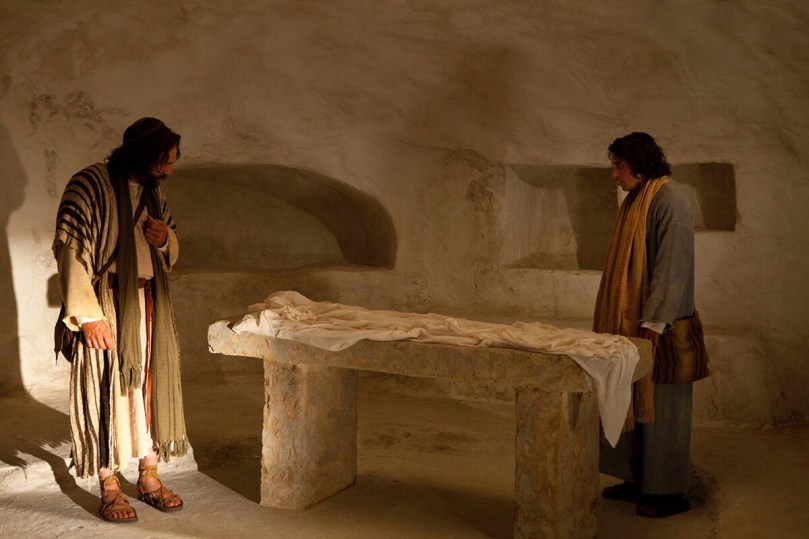
From the confusion of Friday, still reeling from the shock of the cruel death of Jesus “the women” went to the tomb. The tasks they had expected to perform were abandoned.

A conversation with an angel left them confused, as they tried to piece together events of the previous few days and the reality of an empty tomb.

They didn’t wander back, chatting as they went.

Partly out of fear – they had just seen an angel after all, and partly because they dared to hope that Jesus had meant what he promised, they ran back to their friends to tell them the good news.

Once they had blurted out their story, in disbelief, two of Jesus closet friends, Peter & John ran to the tomb. They found things just as women had described.

The thing that struck me when I read this was how much running there was.

Either Jesus didn’t rise and we can move on with our lives – or he did, and we need to move quickly, with purpose to tell people what we know. To share the good news.

Jesus IS ALIVE.

Do you have good news to tell. Are you ready to run to tell others the good news?

Our testimony – they story of what Jesus has done for us, may be exactly the story our friends need to hear. Are you willing to tell that story?

If the fragility of life has not directly affected you personally yet this year, just watch the news. There really is no time to waste – we don’t all have to run, but most of us have to move quicker than we have been.

A view from Friday night.

Have you ever felt that everything was going really well, things were comfortable and you could see the future was rosy, only to have everything change in a heartbeat, the bottom fallen out of your world, and everything seem hopeless again?

I imagine that is exactly how the disciples felt on what we now call Good Friday, over two thousand years ago.

Life was tough. The Romans were in power, and there didn’t seem to be any way out. There was no way that any of them could see to change things. I imagine that they had decided that the best way was to keep their heads down and just get on with what they did best, whether that be fishing or collecting taxes. Not being noticed was the order of the day.

Then Jesus came along, and everything changed. Their lives were flipped upside down. None of it made any sense at all, but they all knew, deep inside that they would never be the same again. They knew they had found the promised Messiah. He didn’t act like they had expected, in fact he was so completely different to the deliverer that was anticipated that many who saw Him didn’t recognise Him. Those that did though, those that simply followed when He asked were changed, and in turn, change history.

They knew that as long as Jesus was there everything would be ok. For everything that they didn’t understand, He did. They knew Jesus was the answer.

And then He was gone.

A late night walk in a garden after dinner and everything had gone wrong. In a heartbeat. A rushed trial, a crucifixion and a quick burial.

How did this fit into His plan? None of it made any sense. Locked away, scared of reprisals due to association with Jesus. Just trying to figure out what happened, and what would happen next.

Of course we have the advantage of knowing the next part of the story. It’s Friday but Sunday is coming. For the disciples though, there was only confusion. And hurt. And loss. And probably a fair helping of anger.

Many, if not all those who read this will be familiar with this story.

How many of us are able to see our own lives in this though?

Have you just begun to get it together and suddenly things change?

In 2011 life was good. I was experiencing things I hadn’t even dreamed possible. The stuff we read about in Acts was happening in front of me. God had never seemed so close.

And then cancer hit my family. And then an artery in my stomach burst.

Where was God in all that? The answer to all my questions seemed to have left the building. If I’m honest, without the hindsight how the Easter story ends I’m not sure how I would have coped. I really would have lost all hope, all trust in the One who had promised never to leave me yet appeared to have done just that.

The fact is, He never did leave; but He did encourage me to find Him in what was happening. You see, there was a plan. If He had told me what it was I would have avoided it at all costs. Trust me, if you can avoid it don’t burst an artery in your stomach. But would I change what He taught me through that experience? Never.

Did he orchestrate it- I don’t believe He did. Did He use it – absolutely.

What is my point?

Whatever you are experiencing this Easter is only a part of the journey. I’m not saying it doesn’t hurt. I’m not saying that I understand – but I do know, from personal experience that there is a Sunday after the pain of Friday. There may be tears in the night but joy comes in the morning.

When your world is imploding, trust in the one who has held you thus far. Look for Him in the midst of it all.

There is a plan – and Sunday is coming.

Nothing else works

There is an inevitability about life – at some point it will end.

Knowing that there is a statistic that can’t be changed – all but two people in history have died, is something that most of us try and forget. Many of us have at least a subconscious mental picture of how and when that might happen – who hasn’t envisioned slipping away peacefully in bed at 100 years old? We choose 100 because we can’t imagine being that old, and therefore can’t imagine ever having to think about death.

When one hears news that radically changes our view on when the inevitable will happen, there are several emotions that cycle through ones mind. This is the journey that my family are walking at the moment – mum has cancer, and the doctors say they can’t cure her.

I remember when the Queen Mother died at a ripe old age. She had always been there, seemingly forever. Parents are a bit like that. Ever present. You see, for people that have simply always been there, it is almost impossible to envision a world without them.

How does one process the fact that they might be gone sooner than your mental picture of how it would happen?

Many of us if honest would admit to begin to question what is truth. Perhaps you have always said “God is good, and all the time God is good”. This oft used phrase trips of the tongue easily when life is easy, but maybe not so when your world is turned upside down. How can God be good? If He were, mum would be healthy and cancer free.

Perhaps you’ve read that God is the healer – and yet you’ve prayed and prayed and nothing appears to have happened. Therefore you’ve convinced yourself that God doesn’t heal, and the words that you’ve read in the bible have to be interpreted a different way. After all, if this were true, mum would be healthy and disease free.

I was at a concert recently, the band sang a song off their new album. There were some lyrics that struck me “what’s true in the light is still true in the dark. You’re good and you’re kind and you care for this heart. Lord I believe, You weep with me.”

Circumstance doesn’t stop truth being true. God is still good. God is still healer. If both these things are true, we can begin to believe all the other things we read.

He does understand. He does care. He will be my peace. He will sustain me. He will comfort me. He will raise me up.

The truth is that whatever the reality we live in – God is still the one who can break chains and turn impossible situations around. I believe that He wants to do that more than we realise or ask for. He loves the person we are praying for more than we do.

But even if He doesn’t – God is still good.

At some point in the future there will be tears for the fact that mum is no longer with us. Only time will tell whether this is at the ripe old age of 100 or sooner. I intend to pray for her total healing either way.

Given the truth that God is healer, if it is cancer that takes her, I have no doubt that there will be hurt and desperation. There will be anger – “why?” will be a prominent question. But through it all, God will be there. He will be weeping with me, but He is still good, and He still wants me to be part of His plan.

I believe that. I have to believe that. I don’t have anything else. Nothing else works.

It’s gonna rain – are you ready?

The-ArkImagine the scene.

Everything was going wrong. God had created a wonderful, perfect, sinless world. Adam and Eve had the experience of “walking in the cool of the day” with God. Enjoying the presence of God, learning from Him. And then Adam sinned, ate from the tree which God had forbidden and there began the downward spiral towards ruin. It simply wasn’t supposed to end like this.

God knew that giving mankind freewill might result in this, but He didn’t want puppets, He wanted relationship.

Genesis says that there came a point in time when “mankind’s intention was towards evil at all times.” (Gen 6:5) It got so bad that God, who perhaps only 1000 years before had declared that all of creation was good, had decided that He was sorry that He had made man.

According to Genesis, there was only one man who found favour in the eyes of the Lord. Noah.

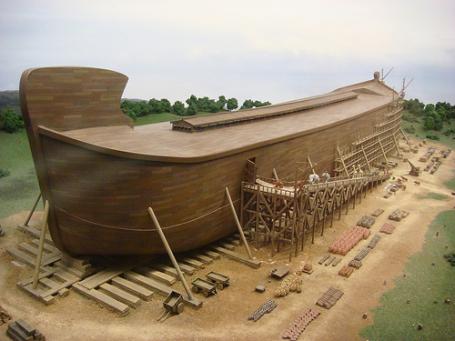
Many of us will be familiar with the story of Noah. God speaks to Him, tells him to build a boat, with space for every kind of animal (various numbers depending on whether they were clean or unclean), and his wife, three sons and their wives.

It rained, perhaps for the first time ever, every other man, woman and child was wiped from the face of the earth, along with all the animals. After the flood waters subsided, Noah and his family became the basis for mankind’s continued existence on earth.

Aside from the fact that the story of almost destruction of mankind from the face of the earth isn’t the “nice” children’s story that we frequently tell it as, I often wonder how Noah felt being the only person who God saw as worth saving. God had promised that Noah and his family would survive, but how did it feel in real life, when he started building a boat, miles from the nearest body of water?  Imagine the ridicule. The taunting. If Noah was the only righteous man on the face of the earth, the taunting likely came from his own family too. I imagine there was frequent sabotage of the project. After all, mankind was evil, and the Ark was Gods lifeboat.

My reading of the text suggests that the boat took at least 120 years to build. That’s a lot of ridicule. Day after day, year after year.  We struggle with even a few minutes taunting, and yet Noah persevered for decades.

How does one stay focused when literally everything, and everyone around you, wants to see you fail. Wants to destroy what you are doing and what you stand for.

We read in Hebrews chapter 11 that Noah constructed the boat, which condemned the world, and made him an heir of righteousness, which comes by faith.

So Noah had faith, but what does it mean to have the kind of faith that will persevere even if the entire world is against you?


There have been many definitions suggested but much more qualified people than me.


Personally, I like the one given at the beginning of Hebrew 11 “Now faith is the substance of things hoped for, the evidence of things not seen”.


Substance can be defined as “the real physical matter of which a person or thing consists of, and which has a tangible, solid presence.” Faith is touchable. Faith carries weight. When you have faith in something it is not some whimsical, ethereal thing. It is very real.

Noah had received something from God that allowed him to continue through all the taunts and doubt that must surely have occurred over those long 120 years.

Is faith like that possible today?


I believe it is. The Hebrew word Yada means to know. I find it interesting that this word is a verb. It’s active, not passive. I want to suggest that Noah knew (yada) God. You can’t have true faith in someone or something without ‘knowing that you know that you know’. You can’t endure 120 years of ridicule without being absolutely confident that the One in whom you have put your trust is trustworthy.


I think that is the secret. We need to know God. The question is how does one do that. I mean, God must be busy right? He is far to consumed with holding yyhe planet together, and answering the prayers of the popular preachers on YouTube to take an interest in knowing me?

Not true, God is crazy about you. He is waiting patiently for you to ask Him to come. He won’t force Himself into your life – but if you will but ask – you will find that He is right next to you, desperate to show you all that He has for you.

I believe that we need to actively pursue Him. Actively spend time with Him. Actively learn from Him and enjoy His presence. I think that we need activity to know Him. The beauty about God is that there is always more to find out. If we keep actively pursuing Him, the faith that Noah had, the ability to endure, to keep on going when you think there is no end in sight will develop.

Faith is a muscle. The more you use it the bigger it gets. I don’t believe that Noah suddenly had the faith to endure whilst he built a boat in the middle of nowhere. His day to day life must have needed faith and endurance. The world was spiralling towards destruction and Noah was the only righteous man found on the face of the earth. That took a daily dose of faith and connection with God.

Why do we think we can do it differently?

Imagine the scene.

Everything was going wrong. God had created a wonderful, perfect, sinless world. Adam and Eve had the experience of “walking in the cool of the day” with God. Enjoying the presence of God, learning from Him. And then Adam sinned, ate from the tree which God had forbidden and there began the downward spiral towards ruin. It simply wasn’t supposed to end like this.

God knew that giving mankind freewill might result in this, but He didn’t want puppets, He wanted relationship.

Genesis says that there came a point in time when “mankind’s intention was towards evil at all times.” (Gen 6:5) It got so bad that God, who perhaps only 1000 years before had declared that all of creation was good, had decided that He was sorry that He had made man.

According to Genesis, there was only one man who found favour in the eyes of the Lord. Noah.

Many of us will be familiar with the story of Noah. God speaks to Him, tells him to build a boat, with space for every kind of animal (various numbers depending on whether they were clean or unclean), and his wife, three sons and their wives.

It rained, perhaps for the first time ever, every other man, woman and child was wiped from the face of the earth, along with all the animals. After the flood waters subsided, Noah and his family became the basis for mankind’s continued existence on earth.

Aside from the fact that the story of almost destruction of mankind from the face of the earth isn’t the “nice” children’s story that we frequently tell it as, I often wonder how Noah felt being the only person who God saw as worth saving. God had promised that Noah and his family would survive, but how did it feel in real life, when he started building a boat, miles from the nearest body of water?  Imagine the ridicule. The taunting. If Noah was the only righteous man on the face of the earth, the taunting likely came from his own family too. I imagine there was frequent sabotage of the project. After all, mankind was evil, and the Ark was Gods lifeboat.

My reading of the text suggests that the boat took at least 120 years to build. That’s a lot of ridicule. Day after day, year after year.  We struggle with even a few minutes taunting, and yet Noah persevered for decades.

How does one stay focused when literally everything, and everyone around you, wants to see you fail. Wants to destroy what you are doing and what you stand for.

We read in Hebrews chapter 11 that Noah constructed the boat, which condemned the world, and made him an heir of righteousness, which comes by faith.

So Noah had faith, but what does it mean to have the kind of faith that will persevere even if the entire world is against you?


There have been many definitions suggested but much more qualified people than me.


Personally, I like the one given at the beginning of Hebrew 11 “Now faith is the substance of things hoped for, the evidence of things not seen”.


Substance can be defined as “the real physical matter of which a person or thing consists of, and which has a tangible, solid presence.” Faith is touchable. Faith carries weight. When you have faith in something it is not some whimsical, ethereal thing. It is very real.

Noah had received something from God that allowed him to continue through all the taunts and doubt that must surely have occurred over those long 120 years.

Is faith like that possible today?


I believe it is. The Hebrew word Yada means to know. I find it interesting that this word is a verb. It’s active, not passive. I want to suggest that Noah knew (yada) God. You can’t have true faith in someone or something without ‘knowing that you know that you know’. You can’t endure 120 years of ridicule without being absolutely confident that the One in whom you have put your trust is trustworthy.


I think that is the secret. We need to know God. The question is how does one do that. I mean, God must be busy right? He is far to consumed with holding yyhe planet together, and answering the prayers of the popular preachers on YouTube to take an interest in knowing me?

Not true, God is crazy about you. He is waiting patiently for you to ask Him to come. He won’t force Himself into your life – but if you will but ask – you will find that He is right next to you, desperate to show you all that He has for you.

I believe that we need to actively pursue Him. Actively spend time with Him. Actively learn from Him and enjoy His presence. I think that we need activity to know Him. The beauty about God is that there is always more to find out. If we keep actively pursuing Him, the faith that Noah had, the ability to endure, to keep on going when you think there is no end in sight will develop.

Faith is a muscle. The more you use it the bigger it gets. I don’t believe that Noah suddenly had the faith to endure whilst he built a boat in the middle of nowhere. His day to day life must have needed faith and endurance. The world was spiralling towards destruction and Noah was the only righteous man found on the face of the earth. That took a daily dose of faith and connection with God.

Why do we think we can do it differently?

The “Serenity Prayer”

Hands crossed in prayer

I came across the Serentity prayer by Reinhold Niebuhr (1892-1971) a little while ago on Facebook. Niebuhr was an American theolgian who commented on politics and religion. His serenity prayer (or at least the first part of it) is used by Alcoholics anonymous as part of their program.the world over. Many of us will be familiar with at least the first part, but will be less so with the next section.

God grant me the serenity to accept the things I cannot change, Courage to change the things I can, and the wisdom to know the difference.

Living one day at a time; enjoying one moment at a time; accepting hardship as the pathway to peace.

Taking as He did, this sinful world as it is, not as I would have it; trusting that He will make all things right if I surrender to His will;

That I may be reasonably happy in this life, And supremely happy with Him forever in the next.

I know that I have read this several times, assumed that it was fine, usually because of who had posted it, without given it a second thought. Having been caught out a few times, I have started looking a bit more carefully at things before blindly forwarding them. And thats when it all started!!

The more I looked at the prayer, the more I found that there was only really one statement in it that I could fully agree with. Other statements didn’t sit comfortably with me (I’m not going to address them here as I haven’t fully processed my thoughts on them) and others I felt were just plain wrong. I understand that this is just my opinion on this – but it’s my blog and I get to say what I want 🙂

Serenity means tranquility, peace, calmness and stillness. There is no doubt that God can grant us peace. The peace He promises is His peace. Not a worldly peace (which is so often filled with doubt), but a peace that “trancends understanding” (Phil 4:7). I have experienced this peace personally – when the world has been falling in around me, I have felt unexplicably calm and composed. When I say it’s inexplicalble, I really do mean that. I wish I could explain it to you – but I just feel peace.

So the prayer asks God to grant us this peace for a purpose. “To accept things that I cannot change, and courage to change those that I can.”

Whilst I understand the sentiment of this statement, the problem I have with it is that it restricts the truth in scripture that “I can do all things through Him who strengthens me.” (Phil 4:13). If we can do all things through Christ, that surely means that there is nothing that I cannot change. I can accept that our experience may be different from this, however, I am a firm believer that if we start from a point of accepting that we might fail, we are never going to be dissapointed. I choose to believe that if scripture tells me I can do all things, that means I can do all things. If I find that things aren’t changing, scripture is still truth, and I need to ask God to help me to change them.

The prayer goes on – “accepting hardship as the pathway to peace”. Really? There is clear evidence in scripture that we will experience hardship. Jesus himself warned us that we would experience hardship. We will be laughed at and mocked because we follow Jesus. The apostle Paul’s life was testament to the fact that life will be tough for the sake of the gospel. The only way we are going to be able to survive this sort of persecution is reliance on the one who give perfect peace. The answer to any problem is never found in the problem – it is only ever found in Jesus.

Taking as He did, this sinful world as it is, not as I would have it.”. 

Jesus did indeed come to this world as it was. The bible says that “at the right time, Christ died for us“. (Rom 5:6). The world was full of sin (not much has changed has it? , and Jesus came into that world. Jesus came to turn the world on its head. He came to destroy the work that the devil does. And He has told us to do likewise. I am called to be a world changer – not to accept the world as it is. I’m called to love those whom I come in contact with – and to point them to Jesus. The world is messed up, and Jesus has given me (and you if you are a Christian) authority over everything that isn’t good.

That I might be reasonably happy in this life.” Jesus is the example that I want to model my life on. He is the one that I seek to emlulate. Was Jesus reasonably happy? The Psalmist, prophosing about Jesus was “annointed with the oil of gladness beyond His companions.”  Luke 10:21 says that “In that same hour He rejoiced in the Holy Spirit” It doesn’t appear that Jesus was “reasonably happy”, but was someone who was filled with joy.  The key to this was being filled with the Holy Spirit. I suppose it is possible to be reasonably happy without Holy Spirit, but why settle for reasonable, when the Holy Spirit gives us access to “fullness of joy” and “perfect peace”?

One thing we can be sure of however, is that the life we will have with Him will be supremely better than what we experience in this life. 

Stephen Curtis Chapman wrote a song years ago called “More to this life.” He sang the “there is more to this life, than living and dying, more than just trying to make it through the day.”

I think he was right – and God wants to do so much more with and through us – will you let Him??


Nearly Birthday thoughts

It’s nearly 2018, which means it’s nearly time for me to “celebrate” my birthday.

I’ve been thinking about my birthdays in general, and how I feel about them. It’s not the growing old that I have a problem with, it’s the celebration part.

It’s not that I don’t like to celebrate – just that I don’t really enjoy celebrating me.

I’ve never really felt comfortable with being at the centre of attention – or with others putting me there.

For me, there are always other things, bigger things, more important things than me to think about.

Some of them are deeply personal. Others, well, just switch on the news.

It makes it difficult to celebrate when there is so much hurt, loss and despair.

I think it’s easier to celebrate yourself if you are comfortable with yourself. If you struggle with promoting yourself because you don’t think you are worth promoting then you will struggle to celebrate without holding anything back.

The thing is, that if you have been around the church for any amount of time, you are likely to have heard the message “Jesus first, yourself last and others in between”. It’s certainly been my mantra for decades. Sometimes unconsciously, but there nonetheless.

The problem with that mantra though is that if one isn’t careful, one can begin to think that your life and cares are not just less important, but not important at all.

If you are not important, then there is little point in loving yourself.

And that brings an even bigger problem.

I’m called to “love my neighbour as I love myself”. If I can’t love me, My neighbour is going to have a hard time believing I love them.

As Christians one of our primary goals is to love people. The expression of that love may take several forms. It may be simply being available. It may be praying for healing. It may be expressed in a moment, or over decades. But you can be sure that if you really love someone, they will know that they have been loved.

So I guess that I’m saying is it’s ok to love yourself. It’s ok to celebrate you. Maybe, just maybe it will help in our mission to make disciples of all nations.