Nothing else works

There is an inevitability about life – at some point it will end.

Knowing that there is a statistic that can’t be changed – all but two people in history have died, is something that most of us try and forget. Many of us have at least a subconscious mental picture of how and when that might happen – who hasn’t envisioned slipping away peacefully in bed at 100 years old? We choose 100 because we can’t imagine being that old, and therefore can’t imagine ever having to think about death.

When one hears news that radically changes our view on when the inevitable will happen, there are several emotions that cycle through ones mind. This is the journey that my family are walking at the moment – mum has cancer, and the doctors say they can’t cure her.

I remember when the Queen Mother died at a ripe old age. She had always been there, seemingly forever. Parents are a bit like that. Ever present. You see, for people that have simply always been there, it is almost impossible to envision a world without them.

How does one process the fact that they might be gone sooner than your mental picture of how it would happen?

Many of us if honest would admit to begin to question what is truth. Perhaps you have always said “God is good, and all the time God is good”. This oft used phrase trips of the tongue easily when life is easy, but maybe not so when your world is turned upside down. How can God be good? If He were, mum would be healthy and cancer free.

Perhaps you’ve read that God is the healer – and yet you’ve prayed and prayed and nothing appears to have happened. Therefore you’ve convinced yourself that God doesn’t heal, and the words that you’ve read in the bible have to be interpreted a different way. After all, if this were true, mum would be healthy and disease free.

I was at a concert recently, the band sang a song off their new album. There were some lyrics that struck me “what’s true in the light is still true in the dark. You’re good and you’re kind and you care for this heart. Lord I believe, You weep with me.”

Circumstance doesn’t stop truth being true. God is still good. God is still healer. If both these things are true, we can begin to believe all the other things we read.

He does understand. He does care. He will be my peace. He will sustain me. He will comfort me. He will raise me up.

The truth is that whatever the reality we live in – God is still the one who can break chains and turn impossible situations around. I believe that He wants to do that more than we realise or ask for. He loves the person we are praying for more than we do.

But even if He doesn’t – God is still good.

At some point in the future there will be tears for the fact that mum is no longer with us. Only time will tell whether this is at the ripe old age of 100 or sooner. I intend to pray for her total healing either way.

Given the truth that God is healer, if it is cancer that takes her, I have no doubt that there will be hurt and desperation. There will be anger – “why?” will be a prominent question. But through it all, God will be there. He will be weeping with me, but He is still good, and He still wants me to be part of His plan.

I believe that. I have to believe that. I don’t have anything else. Nothing else works.

It’s gonna rain – are you ready?

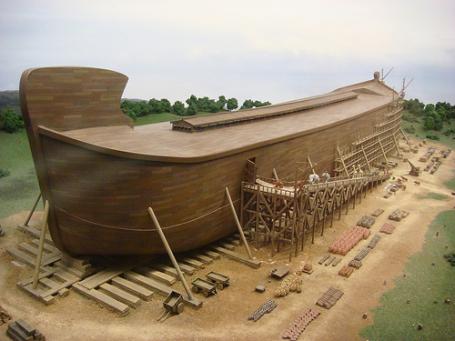
The-ArkImagine the scene.

Everything was going wrong. God had created a wonderful, perfect, sinless world. Adam and Eve had the experience of “walking in the cool of the day” with God. Enjoying the presence of God, learning from Him. And then Adam sinned, ate from the tree which God had forbidden and there began the downward spiral towards ruin. It simply wasn’t supposed to end like this.

God knew that giving mankind freewill might result in this, but He didn’t want puppets, He wanted relationship.

Genesis says that there came a point in time when “mankind’s intention was towards evil at all times.” (Gen 6:5) It got so bad that God, who perhaps only 1000 years before had declared that all of creation was good, had decided that He was sorry that He had made man.

According to Genesis, there was only one man who found favour in the eyes of the Lord. Noah.

Many of us will be familiar with the story of Noah. God speaks to Him, tells him to build a boat, with space for every kind of animal (various numbers depending on whether they were clean or unclean), and his wife, three sons and their wives.

It rained, perhaps for the first time ever, every other man, woman and child was wiped from the face of the earth, along with all the animals. After the flood waters subsided, Noah and his family became the basis for mankind’s continued existence on earth.

Aside from the fact that the story of almost destruction of mankind from the face of the earth isn’t the “nice” children’s story that we frequently tell it as, I often wonder how Noah felt being the only person who God saw as worth saving. God had promised that Noah and his family would survive, but how did it feel in real life, when he started building a boat, miles from the nearest body of water?  Imagine the ridicule. The taunting. If Noah was the only righteous man on the face of the earth, the taunting likely came from his own family too. I imagine there was frequent sabotage of the project. After all, mankind was evil, and the Ark was Gods lifeboat.

My reading of the text suggests that the boat took at least 120 years to build. That’s a lot of ridicule. Day after day, year after year.  We struggle with even a few minutes taunting, and yet Noah persevered for decades.

How does one stay focused when literally everything, and everyone around you, wants to see you fail. Wants to destroy what you are doing and what you stand for.

We read in Hebrews chapter 11 that Noah constructed the boat, which condemned the world, and made him an heir of righteousness, which comes by faith.

So Noah had faith, but what does it mean to have the kind of faith that will persevere even if the entire world is against you?


There have been many definitions suggested but much more qualified people than me.


Personally, I like the one given at the beginning of Hebrew 11 “Now faith is the substance of things hoped for, the evidence of things not seen”.


Substance can be defined as “the real physical matter of which a person or thing consists of, and which has a tangible, solid presence.” Faith is touchable. Faith carries weight. When you have faith in something it is not some whimsical, ethereal thing. It is very real.

Noah had received something from God that allowed him to continue through all the taunts and doubt that must surely have occurred over those long 120 years.

Is faith like that possible today?


I believe it is. The Hebrew word Yada means to know. I find it interesting that this word is a verb. It’s active, not passive. I want to suggest that Noah knew (yada) God. You can’t have true faith in someone or something without ‘knowing that you know that you know’. You can’t endure 120 years of ridicule without being absolutely confident that the One in whom you have put your trust is trustworthy.


I think that is the secret. We need to know God. The question is how does one do that. I mean, God must be busy right? He is far to consumed with holding yyhe planet together, and answering the prayers of the popular preachers on YouTube to take an interest in knowing me?

Not true, God is crazy about you. He is waiting patiently for you to ask Him to come. He won’t force Himself into your life – but if you will but ask – you will find that He is right next to you, desperate to show you all that He has for you.

I believe that we need to actively pursue Him. Actively spend time with Him. Actively learn from Him and enjoy His presence. I think that we need activity to know Him. The beauty about God is that there is always more to find out. If we keep actively pursuing Him, the faith that Noah had, the ability to endure, to keep on going when you think there is no end in sight will develop.

Faith is a muscle. The more you use it the bigger it gets. I don’t believe that Noah suddenly had the faith to endure whilst he built a boat in the middle of nowhere. His day to day life must have needed faith and endurance. The world was spiralling towards destruction and Noah was the only righteous man found on the face of the earth. That took a daily dose of faith and connection with God.

Why do we think we can do it differently?

Imagine the scene.

Everything was going wrong. God had created a wonderful, perfect, sinless world. Adam and Eve had the experience of “walking in the cool of the day” with God. Enjoying the presence of God, learning from Him. And then Adam sinned, ate from the tree which God had forbidden and there began the downward spiral towards ruin. It simply wasn’t supposed to end like this.

God knew that giving mankind freewill might result in this, but He didn’t want puppets, He wanted relationship.

Genesis says that there came a point in time when “mankind’s intention was towards evil at all times.” (Gen 6:5) It got so bad that God, who perhaps only 1000 years before had declared that all of creation was good, had decided that He was sorry that He had made man.

According to Genesis, there was only one man who found favour in the eyes of the Lord. Noah.

Many of us will be familiar with the story of Noah. God speaks to Him, tells him to build a boat, with space for every kind of animal (various numbers depending on whether they were clean or unclean), and his wife, three sons and their wives.

It rained, perhaps for the first time ever, every other man, woman and child was wiped from the face of the earth, along with all the animals. After the flood waters subsided, Noah and his family became the basis for mankind’s continued existence on earth.

Aside from the fact that the story of almost destruction of mankind from the face of the earth isn’t the “nice” children’s story that we frequently tell it as, I often wonder how Noah felt being the only person who God saw as worth saving. God had promised that Noah and his family would survive, but how did it feel in real life, when he started building a boat, miles from the nearest body of water?  Imagine the ridicule. The taunting. If Noah was the only righteous man on the face of the earth, the taunting likely came from his own family too. I imagine there was frequent sabotage of the project. After all, mankind was evil, and the Ark was Gods lifeboat.

My reading of the text suggests that the boat took at least 120 years to build. That’s a lot of ridicule. Day after day, year after year.  We struggle with even a few minutes taunting, and yet Noah persevered for decades.

How does one stay focused when literally everything, and everyone around you, wants to see you fail. Wants to destroy what you are doing and what you stand for.

We read in Hebrews chapter 11 that Noah constructed the boat, which condemned the world, and made him an heir of righteousness, which comes by faith.

So Noah had faith, but what does it mean to have the kind of faith that will persevere even if the entire world is against you?


There have been many definitions suggested but much more qualified people than me.


Personally, I like the one given at the beginning of Hebrew 11 “Now faith is the substance of things hoped for, the evidence of things not seen”.


Substance can be defined as “the real physical matter of which a person or thing consists of, and which has a tangible, solid presence.” Faith is touchable. Faith carries weight. When you have faith in something it is not some whimsical, ethereal thing. It is very real.

Noah had received something from God that allowed him to continue through all the taunts and doubt that must surely have occurred over those long 120 years.

Is faith like that possible today?


I believe it is. The Hebrew word Yada means to know. I find it interesting that this word is a verb. It’s active, not passive. I want to suggest that Noah knew (yada) God. You can’t have true faith in someone or something without ‘knowing that you know that you know’. You can’t endure 120 years of ridicule without being absolutely confident that the One in whom you have put your trust is trustworthy.


I think that is the secret. We need to know God. The question is how does one do that. I mean, God must be busy right? He is far to consumed with holding yyhe planet together, and answering the prayers of the popular preachers on YouTube to take an interest in knowing me?

Not true, God is crazy about you. He is waiting patiently for you to ask Him to come. He won’t force Himself into your life – but if you will but ask – you will find that He is right next to you, desperate to show you all that He has for you.

I believe that we need to actively pursue Him. Actively spend time with Him. Actively learn from Him and enjoy His presence. I think that we need activity to know Him. The beauty about God is that there is always more to find out. If we keep actively pursuing Him, the faith that Noah had, the ability to endure, to keep on going when you think there is no end in sight will develop.

Faith is a muscle. The more you use it the bigger it gets. I don’t believe that Noah suddenly had the faith to endure whilst he built a boat in the middle of nowhere. His day to day life must have needed faith and endurance. The world was spiralling towards destruction and Noah was the only righteous man found on the face of the earth. That took a daily dose of faith and connection with God.

Why do we think we can do it differently?

The “Serenity Prayer”

Hands crossed in prayer

I came across the Serentity prayer by Reinhold Niebuhr (1892-1971) a little while ago on Facebook. Niebuhr was an American theolgian who commented on politics and religion. His serenity prayer (or at least the first part of it) is used by Alcoholics anonymous as part of their program.the world over. Many of us will be familiar with at least the first part, but will be less so with the next section.

God grant me the serenity to accept the things I cannot change, Courage to change the things I can, and the wisdom to know the difference.

Living one day at a time; enjoying one moment at a time; accepting hardship as the pathway to peace.

Taking as He did, this sinful world as it is, not as I would have it; trusting that He will make all things right if I surrender to His will;

That I may be reasonably happy in this life, And supremely happy with Him forever in the next.

I know that I have read this several times, assumed that it was fine, usually because of who had posted it, without given it a second thought. Having been caught out a few times, I have started looking a bit more carefully at things before blindly forwarding them. And thats when it all started!!

The more I looked at the prayer, the more I found that there was only really one statement in it that I could fully agree with. Other statements didn’t sit comfortably with me (I’m not going to address them here as I haven’t fully processed my thoughts on them) and others I felt were just plain wrong. I understand that this is just my opinion on this – but it’s my blog and I get to say what I want 🙂

Serenity means tranquility, peace, calmness and stillness. There is no doubt that God can grant us peace. The peace He promises is His peace. Not a worldly peace (which is so often filled with doubt), but a peace that “trancends understanding” (Phil 4:7). I have experienced this peace personally – when the world has been falling in around me, I have felt unexplicably calm and composed. When I say it’s inexplicalble, I really do mean that. I wish I could explain it to you – but I just feel peace.

So the prayer asks God to grant us this peace for a purpose. “To accept things that I cannot change, and courage to change those that I can.”

Whilst I understand the sentiment of this statement, the problem I have with it is that it restricts the truth in scripture that “I can do all things through Him who strengthens me.” (Phil 4:13). If we can do all things through Christ, that surely means that there is nothing that I cannot change. I can accept that our experience may be different from this, however, I am a firm believer that if we start from a point of accepting that we might fail, we are never going to be dissapointed. I choose to believe that if scripture tells me I can do all things, that means I can do all things. If I find that things aren’t changing, scripture is still truth, and I need to ask God to help me to change them.

The prayer goes on – “accepting hardship as the pathway to peace”. Really? There is clear evidence in scripture that we will experience hardship. Jesus himself warned us that we would experience hardship. We will be laughed at and mocked because we follow Jesus. The apostle Paul’s life was testament to the fact that life will be tough for the sake of the gospel. The only way we are going to be able to survive this sort of persecution is reliance on the one who give perfect peace. The answer to any problem is never found in the problem – it is only ever found in Jesus.

Taking as He did, this sinful world as it is, not as I would have it.”. 

Jesus did indeed come to this world as it was. The bible says that “at the right time, Christ died for us“. (Rom 5:6). The world was full of sin (not much has changed has it? , and Jesus came into that world. Jesus came to turn the world on its head. He came to destroy the work that the devil does. And He has told us to do likewise. I am called to be a world changer – not to accept the world as it is. I’m called to love those whom I come in contact with – and to point them to Jesus. The world is messed up, and Jesus has given me (and you if you are a Christian) authority over everything that isn’t good.

That I might be reasonably happy in this life.” Jesus is the example that I want to model my life on. He is the one that I seek to emlulate. Was Jesus reasonably happy? The Psalmist, prophosing about Jesus was “annointed with the oil of gladness beyond His companions.”  Luke 10:21 says that “In that same hour He rejoiced in the Holy Spirit” It doesn’t appear that Jesus was “reasonably happy”, but was someone who was filled with joy.  The key to this was being filled with the Holy Spirit. I suppose it is possible to be reasonably happy without Holy Spirit, but why settle for reasonable, when the Holy Spirit gives us access to “fullness of joy” and “perfect peace”?

One thing we can be sure of however, is that the life we will have with Him will be supremely better than what we experience in this life. 

Stephen Curtis Chapman wrote a song years ago called “More to this life.” He sang the “there is more to this life, than living and dying, more than just trying to make it through the day.”

I think he was right – and God wants to do so much more with and through us – will you let Him??


Nearly Birthday thoughts

It’s nearly 2018, which means it’s nearly time for me to “celebrate” my birthday.


I’ve been thinking about my birthdays in general, and how I feel about them. It’s not the growing old that I have a problem with, it’s the celebration part.

It’s not that I don’t like to celebrate – just that I don’t really enjoy celebrating me.

I’ve never really felt comfortable with being at the centre of attention – or with others putting me there.

For me, there are always other things, bigger things, more important things than me to think about.

Some of them are deeply personal. Others, well, just switch on the news.

It makes it difficult to celebrate when there is so much hurt, loss and despair.

I think it’s easier to celebrate yourself if you are comfortable with yourself. If you struggle with promoting yourself because you don’t think you are worth promoting then you will struggle to celebrate without holding anything back.

The thing is, that if you have been around the church for any amount of time, you are likely to have heard the message “Jesus first, yourself last and others in between”. It’s certainly been my mantra for decades. Sometimes unconsciously, but there nonetheless.

The problem with that mantra though is that if one isn’t careful, one can begin to think that your life and cares are not just less important, but not important at all.

If you are not important, then there is little point in loving yourself.

And that brings an even bigger problem.

I’m called to “love my neighbour as I love myself”. If I can’t love me, My neighbour is going to have a hard time believing I love them.

As Christians one of our primary goals is to love people. The expression of that love may take several forms. It may be simply being available. It may be praying for healing. It may be expressed in a moment, or over decades. But you can be sure that if you really love someone, they will know that they have been loved.

So I guess that I’m saying is it’s ok to love yourself. It’s ok to celebrate you. Maybe, just maybe it will help in our mission to make disciples of all nations.

Hope?

hope 1

2017 has almost gone – and 2018 beckons.

Its been a busy 12 months, almost hectic at times. There have been highs. Friends have been married, others have had children. There have also been lows. Sickness and loss have never been far away.

I have been on planet earth for nearly 45yrs now, long enough to be certain that 2018 holds more of the same for all of us.

Each of us will experience at least one thing that will challenge us. For some of us, this will be something that will rock the very foundation of all that we hold dear and believe.

What will you do when that challenge comes?

Most of us don’t want to contemplate hardship, sickness or death. We are far happier blocking these thoughts out and focusing on the good things. We think that as long as we don’t entertain the thought, the reality won’t transpire, at least not to us or those we love.

My experience is that determining how you are going to react in a crisis during the crisis is a recipe for disaster. If we have thought about how we will react ahead of time, it makes it far more likely that we will indeed react like that when the crisis hits.

Around 2600yrs ago, the Prophet Jeremiah sat in a cave overlooking the Holy city of Jerusalem, as it was destroyed by the Babylonian King Nebuchadnezzar. The city of the Lord lay in ruins, its’ people taken into exile or slain. The treasures of the temple had been taken back to Babylon. Everything he knew and loved was gone. He felt deserted by the only one who mattered – God. He knew that God had promised this if the city did not turn from its wickedness – but as he watched, God felt distant.

There are many reasons that crisis may find us in 2018 – perhaps some of which will be the subject of different blogs (if I’m feeling brave). Reasons for crisis are not the subject of this blog, but how we will react when our world complelty falls apart, like it did for Jeremiah.

In spite of all that was happening  before his eyes, Jeremiah was able to pen the following –

But this I call to mind,

and therefore I have hope

The steadfast love of the LORD never ceases;

his mercies never come to an end;

they are new every morning;

great is your faithfulness.

“The LORD is my portion,” says my soul,

therefore I will hope in him. (Lamentations 3:21-23 emphisis mine)

Jeremiah recalled something he knew of the Lord. He made a choice to recall the love and mercies of the Lord. He ceased to wallow in self pity and dispair. He didn’t focus on the problem – he focused on the Lord – the only one who held any answers in the face of such a problem.

HOPE is such a simple word. In the letter to the Hebrews, we are told that faith is the substance, the assurance of thing hoped for. The things we have faith in should be able to follow through with assurance and substance. Something we can touch and experience. Hope without faith is pointless. Faith with hope gives us assurance.

What are you hoping for in 2018? Whatever we hope for, we can be assured that God will be with us every step of the way. I choose to accept His love. I choose to recall all that He has done in 2017 (and beyond), I choose be believe that He IS GOOD.

Will trouble come my way – almost certainly. Will I allow it to take up residence in my soul – absolutely not.

I pray that whatever 2018 holds for you – whether you are facing it with exitement or with fear – that you will join me in “calling to mind” the love and mercies of the Lord, and face 2108 with renewed hope.


More Christmas musings

What does Christmas mean to you? For many, Christmas means spending time with family, gifts, and time off work. Some remember “the reason for the season” with gusto, others will only give a token nod to the baby who’s birth started the whole thing. 

The birth of babies tend to be an exciting event. I was privileged to be at the birth of both of my children. The miracle of birth, and the awe as I gazed into the faces of my newborn babies was both humbling and terrifying. I knew I had been given an amazing responsibility, and at the same time I was looking at someone who would turn my world upside down.  

I knew that there would be crying (the babies and me), smell (both again??). But most of all I knew that this baby was pretty helpless without my wife and I.

Babies are small and non threatening. They are pretty helpless for the first few years of life. For the most part all they do at first is eat, sleep and cry. Generally speaking, the birth of a baby to a “normal” family doesn’t do much to change world history. 

That’s where the birth of Jesus is different. Whilst Jesus was all that a baby could be (don’t let that peaceful nativity scene fool you) it certainly wasn’t Heaven come to earth with a whimper.  

When Jesus was born, heaven was announcing that the Lion of Judah was on the scene. That Gods plan for humanity had arrived. There was now a way to repair and restore the fracture that happened in the garden of Eden. History was forever changed. 

In the physical realm there may have been a whimper from a baby, but in the spiritual realm there was an Almighty Lion’s roar. 
We read of angels filling the sky and singing praises when the baby was born. 

The angels knew that significance of the birth. 

But there were others who trembled at the birth – because He had been born to destroy everything they were trying to achieve – and they knew that they had already lost. 

The demons knew the significance of the birth. 

My prayer this Christmas time is that as we celebrate a baby’s birth 2000 years ago, we too know the significance of the birth – and hear the Lion’s roar.

Did it really happen like that????

OLYMPUS DIGITAL CAMERA

Christmas.

A time when the church tells the story of the birth of Jesus.

A time when the world hears of a young girl, travelling over difficult terrain, arrives in the dead of night, can’t find a bed and gives birth that very night in a dirty outbuilding surrounded by animals.

Just after birth, the door is opened, and a load of smelly visitors arrive, closely followed by better smelling visitors with better quality gifts.

And we wonder why the world struggles to believe one of the key messages of our story. That God put skin on and came to dwell with us. That that baby would grow, and eventually give His life to give us access to the Father. That we too might live.

We as Christians have a problem.

The world we live in demands a neatly packaged message, with all the key points in one place. So that is what the church has done with the Christmas story. All the key points, Mary and Joseph, unmarried, Mary pregnant, head to Bethlehem, baby born, Angels, visitors and gifts. All presented as the standard nativity. Everything happens within a 24 hr period so we can all get home for hot chocolate and mince pies.

But they also demand a story that makes sense when examined in detail. That is where the church has fallen short. You see, the story, as presented in nativity plays up and down the country has kept to the same basic script, and not really looked at whether it sounds plausible.

Take the stable, manger and inn for example. We all have a mental image of what that looks like. Our brains see these words and we envisage a Travelodge (other hotels are available), a barn on a dirty farm, probably miles from anywhere, and a wooden box, filled with straw. The church has conveniently concocted lessons from each of these, but the story has never quite sat comfortably with me.

The bible actually says that Mary & Joseph went to Bethlehem, and “while they were there, the time came for her to give birth”. Not on the night they arrived, but some time afterward. Where were they staying? Had they had a booking at the local motel, but had run out of money? Perhaps they had more distinguished guests that needed the room?

We are told that Joseph was a descendant of King David. That alone would have afforded him access to pretty much any home in the town. Match that with a pregnant fiancée, and there isn’t a community in the world that would not have welcomed them into their home.  If there really wasn’t room in a house, there would have been plenty of time for Mary & Joseph to travel the short distance to Mary’s relatives Elizabeth and Zechariah. They lived nearby (Mary had visited a few months earlier.)

Houses in Bethlehem at the time of Jesus would have consisted of two rooms. One, the family room, where the entire family lived. They would have eaten, slept and entertained in this room. An attached room would have been at a slightly lower level to house the family animals. The animals would have been brought in at night to keep them safe. Perhaps there would have been small hollows, filled with straw between the two rooms, so the cows could feed at night. Some houses would have had an additional room added – a guest room. The word translated “inn” can also mean guest room.

How about this for a paraphrase of events.

Mary and Joseph headed to Bethlehem, because there was to be a census, and Joseph was from Bethlehem. Although Mary was pregnant, there was plenty of time to make the journey and get settled. They stayed with one of Josephs relatives. Lots of people had returned for the census, so all the homes were a bit tight for space. Some people who had arrived early had taken up residence in the guest room, so Mary and Joseph had to squeeze in with the rest of the family.

While they were till there, Mary gave birth, surrounded by friends and family. She would have liked to have been in the guest room, but it was full, and moving the occupants out in the middle of the night wasn’t really practical. Conveniently, there was a straw filled hollow at the end of the room, and the baby was placed there to sleep.

Shepherds, who were the lowest of the low in Jewish society were watching their sheep that night. Suddenly and Angel appeared and told them not to be afraid. They thought it was a reasonable emotion, but listened to what the Angel said, and headed down to Bethlehem and found things, just as the Angel had said. They were aware of who they had found. They knew He was the Christ. And they worshipped, and then went back to their fields. Had they felt that the Saviour of the world was living in an inappropriate place, or at the very least less salubrious than their own homes, do you not think they would have offered to rehome the new family?

A couple of years later, astrologers from Arabia came looking for the new King. They brought gifts fit for a King, for they knew the importance of this birth. They had gone to the Palace in Jerusalem initially. They found a King, but not a young child. They kept their gifts, knowing that there was another, worthy recipient.

We don’t have to embellish the story to make it mysterious. We still find Angels, virgin births, and dreams. Perhaps if we start telling it like it was, rather than how “we have always told it” more people would see the truth of the story, and would want to meet the Jesus that came to earth to dwell with us, to reconcile us to the Father, and who wants to give hope and purpose to our lives.

(I unashamedly used Kenneth Bailey “Jesus Through Middle Eastern Eyes, cultural studies in the gospels” as a source for this blog. Any difference in interpretation to his original work as I paraphrased is entirely my own)

May we never stop imagining. 

There are a lot of Christmas themed posts across social media these days. They seem to be appearing earlier and earlier, but perhaps I’m just getting older and less tolerant.Today I read an article entitled “Should parents let their children believe in Santa Claus?”
I must confess, I’ve been avoiding reading it for a few days, because I was pretty sure it was going to annoy me. I wasn’t disappointed. 

The article itself was pretty much what I expected. Basically, I was told that I was a terrible parent because I’ve done nothing to stop my children from believing in someone who doesn’t actually exist. (except for the fact that he does – he just doesn’t live at the North Pole, he lives in Loose)

I wonder if those that have been getting very het up (some of the comments are priceless) at the idea that children believing in Santa will mess them up for life will also prevent their children having imaginary friends, or watching films where something magical happens. In the Lion, the Witch and the Wardrobe there are talking beavers and Lions and ‘animals’ that don’t exist. I’m pretty sure that the people who don’t agree with Santa would have no problem with letting their children immerse themselves in this fantasy. Or allowing them to read books where a rabbit and a fox are the best of friends, or giants give their scarves to giraffes with a cold neck.

 My son plays with Lego, (like normal 8-year olds) and talks to the pieces, describes conversations and adventures with them (again, like normal 8-olds). Am I to stop him, tell him to stop believing the pieces of plastic are real?

I get the fact that we need to tell our kids the “real meaning of Christmas.” We try to present the truth in an accessible way for our kids. We look for a way each year to remind them of the Christmas story. Sometimes this is through a “Jesse tree”, sometimes through doing a “Christmas story advent calendar.”

Truth is important – I don’t dispute that – but the suggestion that believing in Santa Claus will confuse children is later life is, in my opinion ridiculous. 

Perhaps if we were more focused on our  relationship with the Jesus whose birth is celebrated at Christmas there would be less of a need to get tied up in things that probably don’t matter.  Some people (and many of them commented on the original article) seem to have a theologically, rational and logical relationship with a set of rules, which they hope will get them a ticket out of here and into heaven, but they are missing a relationship with the Jesus who wants us to come to him as little children. Innocent, trusting, willing to dream huge dreams, take huge risks and see amazing things happen.  

As adults we understand more than our children do. But I think there is still a place for wonder, and imagination. If we were honest, I don’t think any of us can fully understand how the God of the Universe appeared on earth as a baby. Or how choirs of the heavenly host appeared to shepherds watching their flocks, without disturbing the rest of Bethlehem. We must use our imagination.

I don’t believe that God wants us merely to think about things. The Greeks were great at thinking, and discussing things. And the Greeks were also great at tying themselves up in knots and not actually believing anything concrete.

If I am to see things “beyond that which I can ask OR imagine” I’m going to make sure I ask AND imagine some pretty big things. If I am imagining, isn’t that the same as believing something that isn’t there.

Quite apart from the fact that I don’t believe we can “stop” or “allow” our kids to believe anything they don’t want to, I’m pretty convinced we should be promoting the opposite – get them to dream big. Tell them of a God who loves them and wants the best for them. Who has a plan for them. And that plan is huge!

Two prayers


“I don’t want to ride on someone else’s passion

I don’t want to find that I’m just dry bones

I wanna burn with unquenchable fire

Deep down inside, see or coming alive

Help me find my own flame

Help me find my own fire

I want the real thing

I want your burning desire.”

These words from the United Pursuit song “help me find my own flame” have been going through my head for the past week or so.

Over a year ago, I stepped down from serving on the ministry team at the European School of Supernatural Life (ESSL). There were a number of reasons for this, but one of the key ones was that I had begun to wonder if the supernatural things I’d been experiencing were real for me, or just happening because I was around people who it was real for, and I was just “freeloading” off their blessings. If it really were true for me, I should be able to “do the stuff” when there was just me and God.

I wanted to me sure that it was me that was burning. I was pretty sure I was – but I needed to be 100% convinced.

There is no doubt in my mind that spending time with others on the same mission as you are on is vital. I think it was Bill Johnson who said “ if you want to slay giants, spend time with giant slayers.”

On the other hand, spending time with those who have no vision, those that we satisfied with the way things are has the opposite effect and can result in stagnation.

I believe that there is more to experience than I currently do. I believe in order to experience the ‘more’ it needs to be me that is burning with desire to see it.

I’ve also learned that I’m supposed to be me. God has a plan for me. And He has a plan for you. And the chances of them being the same are highly unlikely. We can be on the same mission, and have different roles on that mission. Your job may be highly visible – preaching, teaching, leading. It might be much more covert – listening, loving or cooking. Each role is vital – but if I try to do the same job as you, and don’t do mine to the very best of my ability – it doesn’t work like it’s supposed to.

It’s ok to celebrate others successes – and I think it is really important – but don’t let’s begin to covet them.

In my year away I discovered that I am indeed burning. Perhaps not as ferociously as I might be, or want to be, but there is definitely a flame. I’m not riding passion of others.

I went back to ESSL this last week, to visit and and was struck by the gentleness of God. There were so many questions I had about how He felt about me. He didn’t tell me off for leaving. He wasn’t cross. He hadn’t left me to fend for myself.

What He did say was that the rest was His idea. That it was good for me. That He hadn’t left me.

But He also said it was time to pick up the baton and start running again. I’m not sure the exact nature of the baton I’ve to pick up this time, or which direction I’ve to run. But I know it’s time. The wounds have had time to heal, it’s time to run again.

This is my new prayer.

Lord I want more of you

Living water rain down on me

Lord I need more of you

Living breath come fill me up. (Jesus Culture)

There’s nothing in a vacuum. 

“Take away from the church the miraculous, the supernatural, the incomprehensible, the unreasonable, the impossible, the unknowable, the absurd, and nothing but a vacuum remains.” Robert G Ingersoll.

Who on earth is Robert G Ingersoll I hear you ask? I had to know too – given that I found the quote on an “atheist” Facebook page.

Let me back up a bit – a family member had commented on a post with an attached picture. I followed the link from that, and ended up looking at a bunch of posts from people who don’t believe in God, and are happy to mock anyone who does.

Then I came across this post. Turns out Ingersoll was an American lawyer in the 19th Century, noted for his broad range of culture and defence of agnosticism.

So here is a man, who believes that “nothing is known or can be known about the existence of God” giving what I believe is one of the most accurate descriptions of what the Church should be like, that I have read in a long time. (Cavieat- when I say “the Church” I’m mean the church generally, not my church specifically, your church specifically. If however, the cap fits………..)

Don’t misunderstand me. I’m not saying that programme is worthless. I’m not saying that kids work, or men’s ministry, or ladies meetings aren’t worthwhile and important for building relationships, introducing non- church to church in a non threatening way and generally doing life together.

But if we do all that at the expense of the supernatural, the unreasonable, the unknowable, the incomprehensible and the frankly absurd then we have missed the point.

You see, Jesus said that we would do the works that He had done, in fact we would do greater things than He had done. Jesus healed everyone who came to Him and asked for healing. Jesus raised the dead. Jesus released people from demonic power. Jesus understood where people were at, and met them there.

How often do we sit back and thank God that we have a great programme, but forget that we haven’t even begun to do the things Jesus did, let alone greater things.

Are you satisfied with that?

I know I’m not.

I love it when Jesus steps in to a situation which is frankly impossible and changes it to possible. I love it when really really clever people pronounce a prognosis and Jesus steps in to the situation and does something which makes no sense whatsoever.

I guess my question is – if an agnostic can see that the church is powerless without Holy Spirit – why can’t the Church see it?

We are so concerned with dotting all he “i’s” and crossing all the “t’s” that we have forgotten the wonder of the unknown. We are so caught up in our need to ensure that no one is offended, that the absurd has no place in our meetings anymore.

We spend endless meetings and sub meetings discussing things that don’t really matter, and Father would have us step out in faith, trusting the impossible to Him.

When I look at the example of Jesus, when I read Acts, and see what the 1st Century church was like and I compare it to the Church today they are poles apart.

When did we removing the important things, and replacing it with a vacuum of nothing??

Crucially , how do we remove the vacuum and get the important things back?


“if my people who are called by my name humble themselves, and pray and seek my face and turn from their wicked ways, then I will hear from heaven and will forgive their sin and heal their land.”

2 Chronicles 7:14